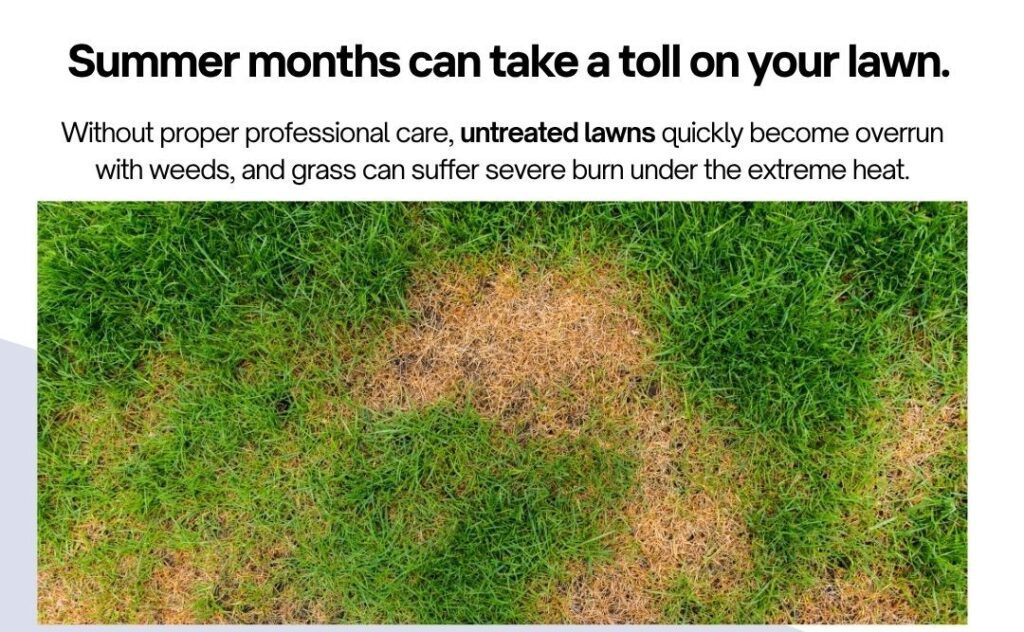
Let’s be honest, none of us are ready to let go of a New England summer. The long evenings, backyard cookouts, green landscapes… It’s one of the best times of the year. But while we’re soaking up the last few weeks of summer, your lawn is telling a different story.
Months of intense heat, little rainfall, heavy foot traffic, mowing, and everyday wear have likely left it tired. Even if it still looks green from a distance, chances are the soil underneath has become compacted, making it harder for water, oxygen, and nutrients to reach the roots where they’re needed most.
The good news?
Fall gives us the perfect opportunity to hit the reset button.
Why Everyone Talks About Aeration & Overseeding This Time of Year
If you’ve ever wondered why landscaping companies start talking about aeration as soon as August rolls around, there’s a good reason.
For cool-season grasses here in New England, late August through October is the sweet spot.
The soil is still warm from summer, the nights become cooler, rainfall is usually more consistent, and weeds begin slowing down. Those conditions create the perfect environment for new grass to establish before winter arrives.
Simply put, your lawn has a much better chance of recovering now than it does in the spring.
Think of It Like This…
Have you ever tried watering a plant whose soil had become hard as concrete?
The water just sits on top. The lawns work the same way.
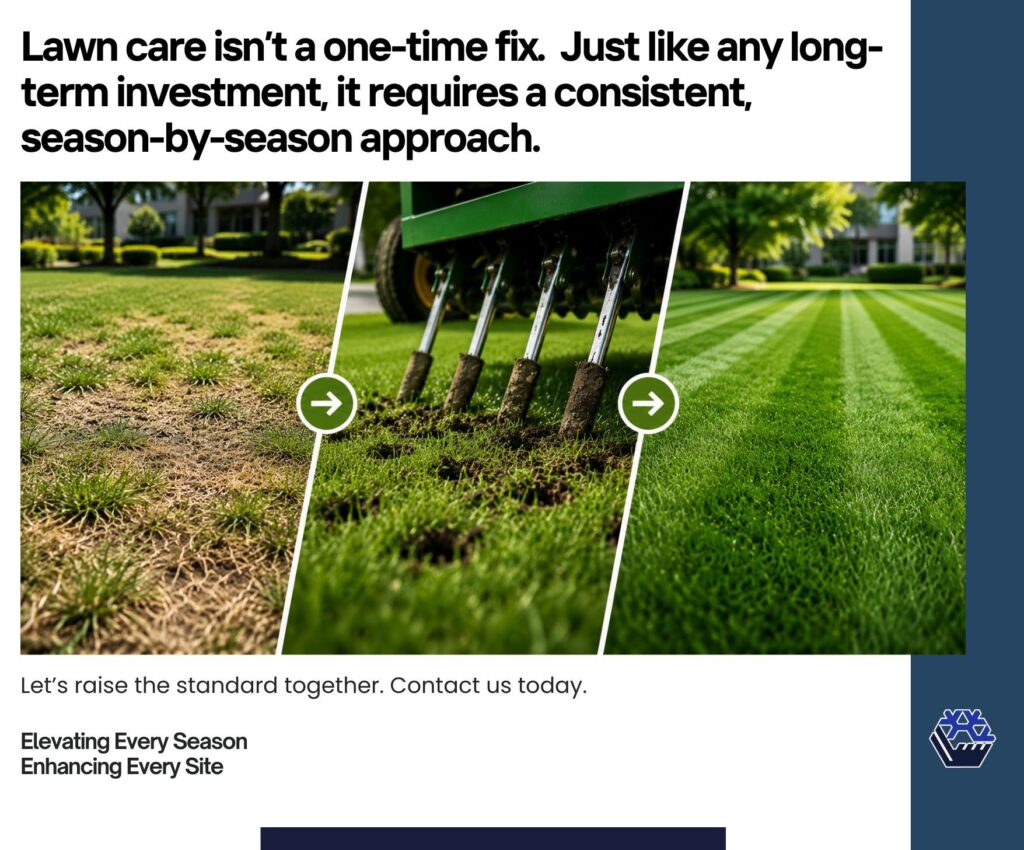
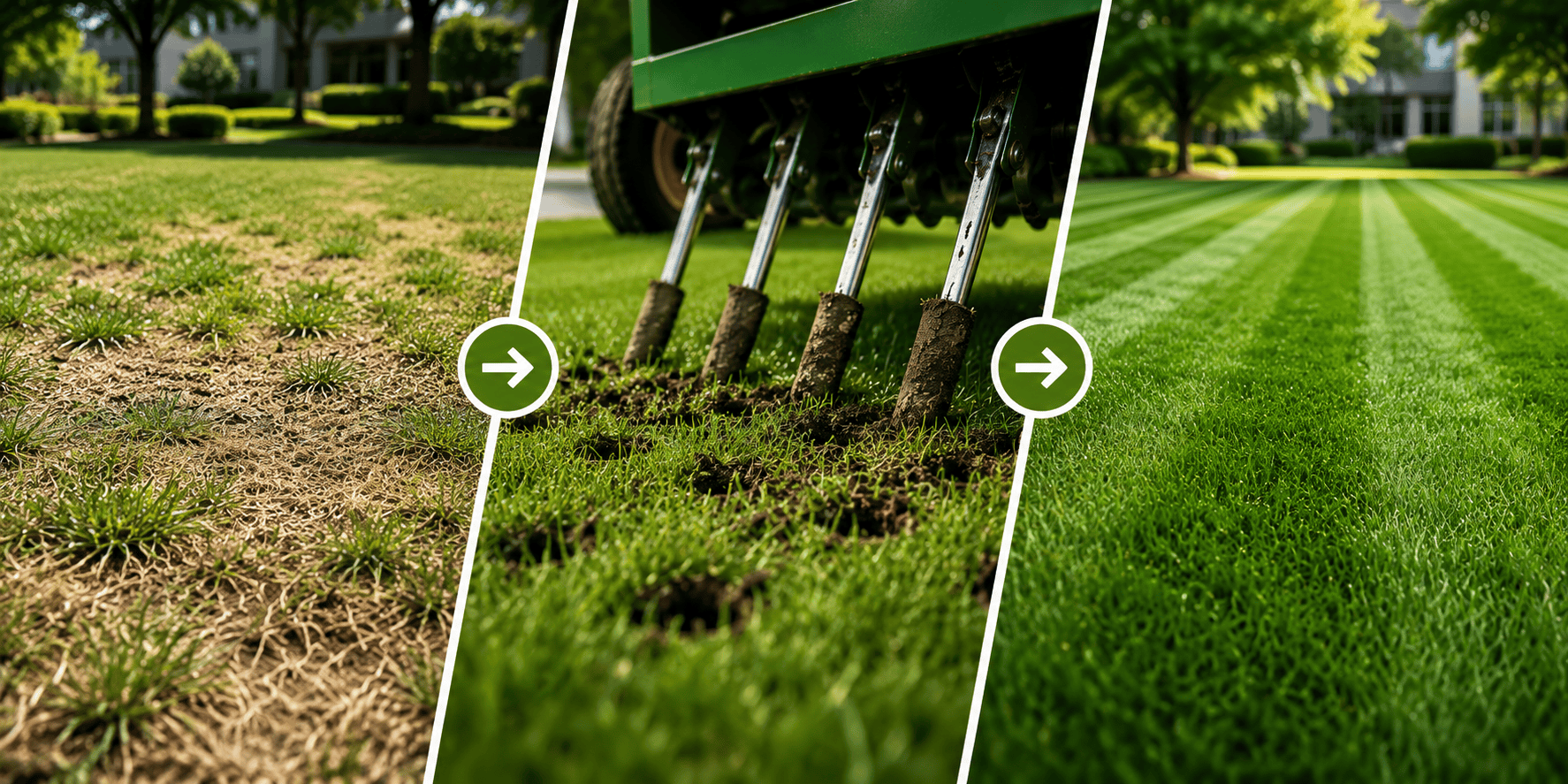
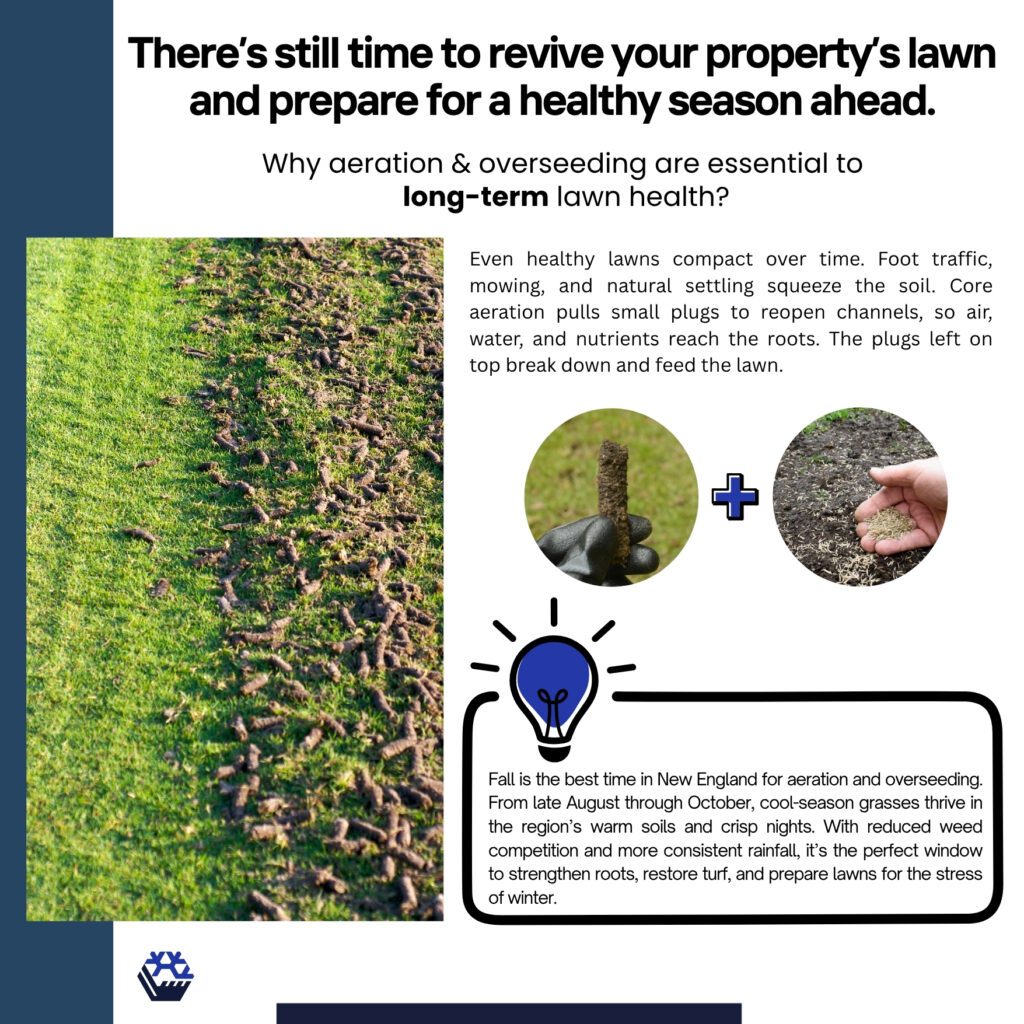
Over time, every lawn becomes compacted. Foot traffic, mowing equipment, pets, children playing, and even Mother Nature slowly squeeze the soil tighter and tighter. That’s where core aeration comes in. By removing small plugs of soil, aeration opens thousands of tiny pathways that allow water, oxygen, and nutrients to travel deeper into the ground and reach the roots.
It may not look pretty for a few days, but your lawn absolutely loves it.
And Then Comes the Overseeding
Now imagine you’ve just opened the perfect little pockets throughout your lawn. What better time to introduce fresh, healthy grass seed? That’s exactly what overseeding does.
The seed falls directly into those openings, making better contact with the soil and dramatically improving germination. Over time, those new grass plants fill in thin areas, increase density, crowd out weeds, and create the thick, lush lawn everyone wants. And remember: it’s not about making your lawn look better for a few weeks. It’s about building a stronger lawn for years to come.
Every Property Has Its Own Story
One thing we’ve learned after caring for properties across New England is that no two lawns behave exactly the same. Some struggle because they get full afternoon sun. Others because they’re constantly shaded. Some receive heavy foot traffic every day, while others simply have poor soil conditions. That’s why there isn’t a one-size-fits-all solution.
The healthiest landscapes are the ones that receive a care plan built around their needs, not someone else’s.
Healthy Lawns Don’t Just Happen
One of the biggest misconceptions in landscaping is that beautiful lawns simply “grow.”
They don’t.
The healthiest properties are the result of small, proactive decisions made throughout the year. Aeration and overseeding happen once each fall, but the benefits show up for months afterward, and especially next spring, when your lawn wakes up stronger, fuller, and ready to thrive.
So as summer slowly gives way to fall (yes… pumpkin spice season is almost here), don’t think of aeration and overseeding as just another landscaping service. Think of it as giving your lawn exactly what it needs after working hard all summer long. Because let’s be honest, every beautiful lawn starts with healthy roots.